


The Ultimate ChatGPT Open AI Review: Features & Pricing Breakdown
“ChatGPT Open AI is a practical AI assistant for drafting, research support, and routine work automation—but it is not a substitute for verified expertise or secure systems of record. For small business owners and startup founders, value depends on plan tier, data controls, and how tightly outputs are checked before use. This review aggregates product specs, official pricing, and market feedback rather than a personal trial narrative. Critical evaluation matters because marketing claims often outpace operational fit. Support documentation reveals that account settings, data controls, and workspace policies shape what teams can safely automate. User reports indicate that results vary sharply by prompt quality, domain complexity, and whether staff treat replies as drafts or final answers. The sections below separate standout capabilities from recurring limits, then map cost to realistic commercial use.”
Table of Contents
1. What Is ChatGPT Open AI and Who Is It For?
2. ChatGPT’s Standout Features (And Hidden Limitations)
3. The Real Cost: ChatGPT Pricing Breakdown
4. Where ChatGPT Falls Short (Critical Analysis)
5. Final Verdict: Is ChatGPT Worth the Investment?
6. Frequently Asked Questions
What Is ChatGPT Open AI and Who Is It For?
ChatGPT Open AI is OpenAI’s consumer and business conversational AI product, accessible through the official ChatGPT website. It is used primarily for text generation, summarization, brainstorming, light analysis, coding help, and customer-facing draft work. For audiences evaluating chatgpt for small business, the useful test is whether daily tasks involve repetitive writing, FAQ drafting, meeting notes, or early-stage analytics narratives—not whether the brand feels modern.
Startup founders needing AI for analytics and growth tasks often treat ChatGPT as a first-pass analyst: clustering feedback themes, outlining experiments, or rewriting messaging for channels. That use case is strong when humans still validate numbers against source systems. One common concern is commercial governance: chatgpt for commercial use requires clarity on plan type, data retention settings, and whether outputs will touch customer or financial data.
A chatgpt for beginners guide starts with account creation, model selection where available, and a short workflow: define the job, constrain format, paste source material, then verify claims. chatgpt business for beginners should prioritize templates for proposals, email replies, and SOP drafts before advanced agent-style automation. Teams that skip verification usually discover that fluency is not the same as accuracy.
Login, settings, and data controls that affect daily use
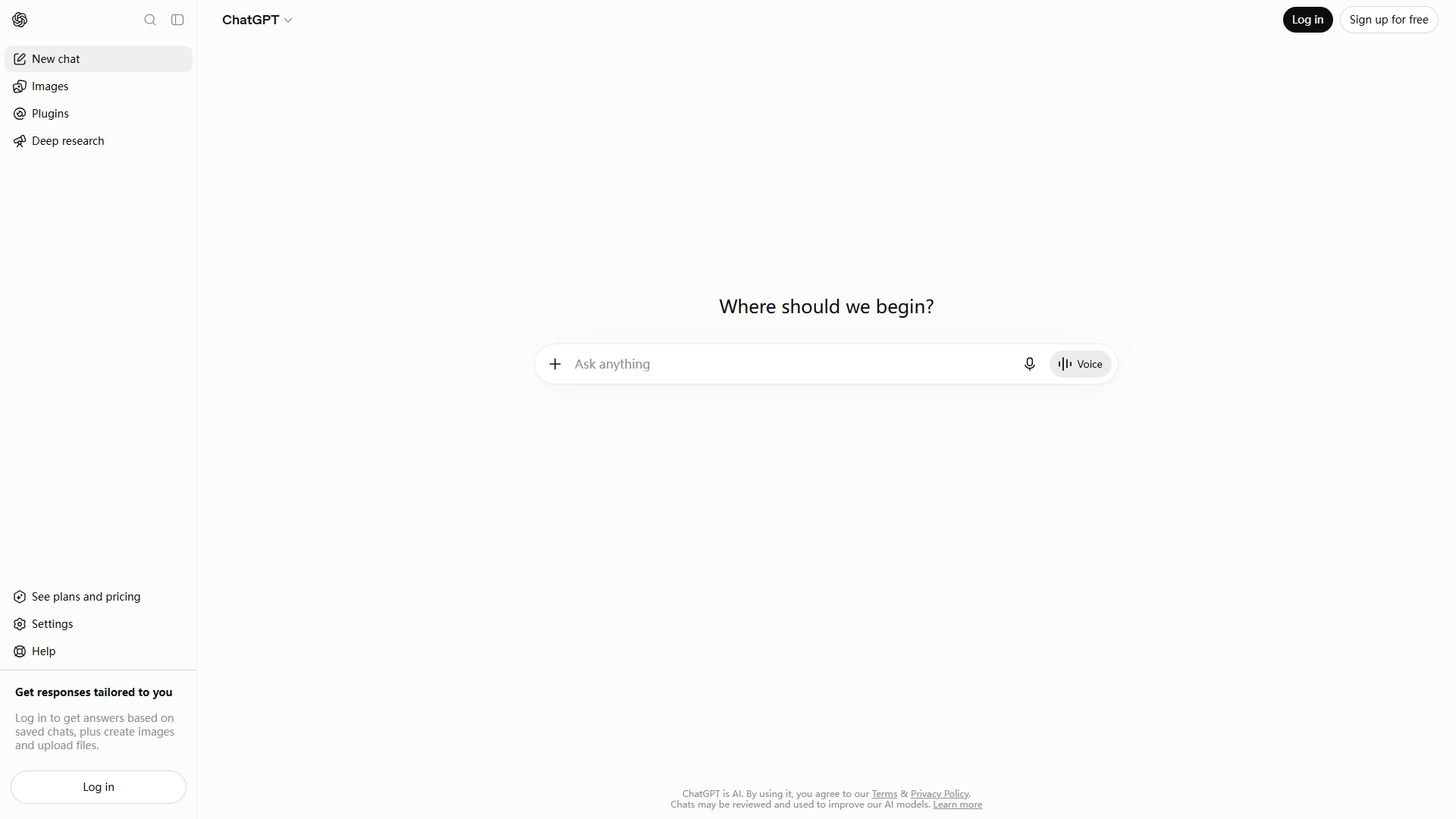
After log in or sign up, users land in a chat interface where current conversations appear in a sidebar and settings control memory, personalization, and data preferences. Clear current chat hygiene—new threads for distinct projects—reduces cross-contamination of context. Data controls and tailored responses matter more for business evaluation than feature demos, because they determine whether ChatGPT behaves like a disposable draft tool or an account-level assistant with retained preferences.
ChatGPT’s Standout Features (And Hidden Limitations)
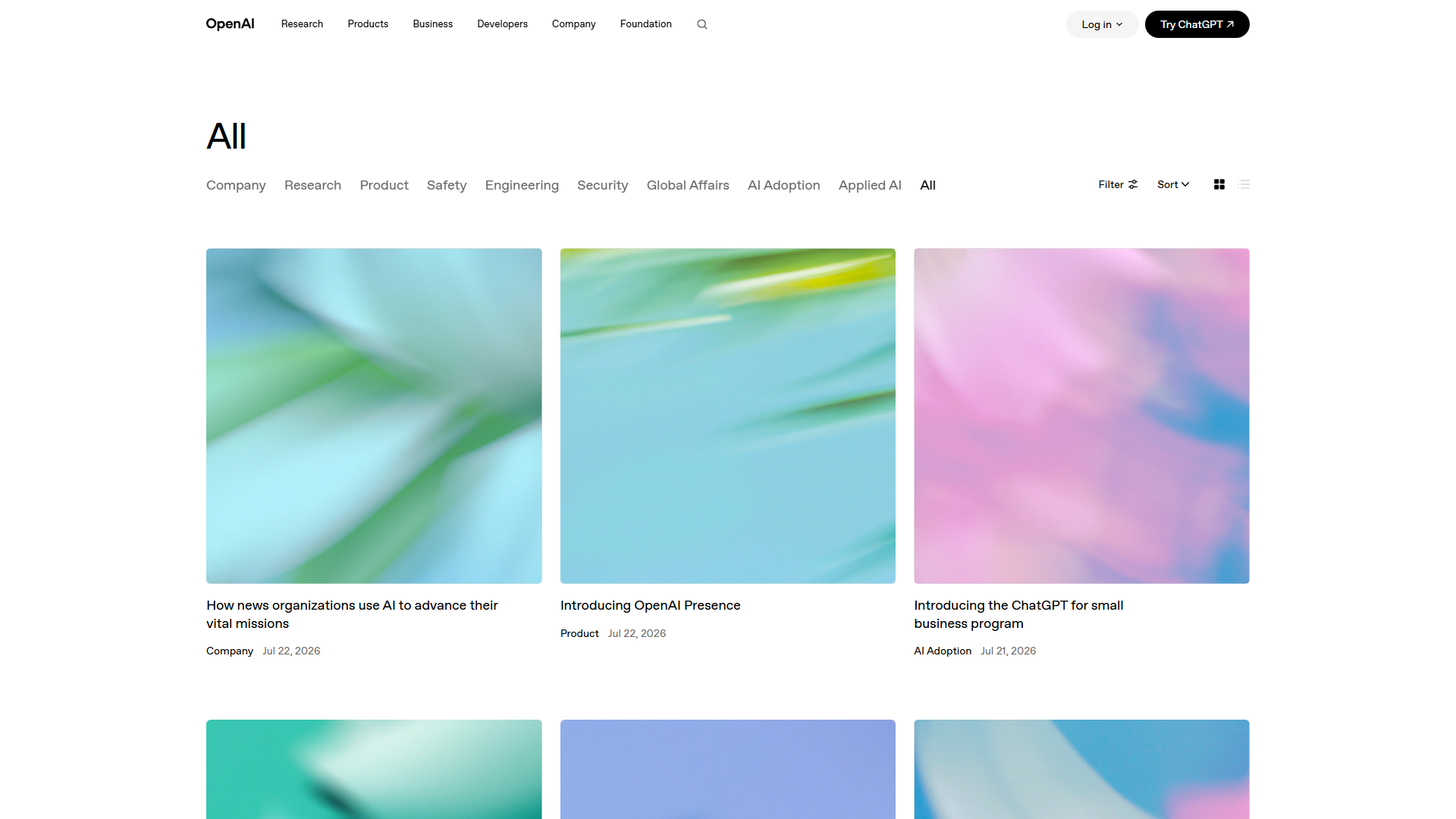
Standout capabilities center on fast drafting, multi-turn refinement, and flexible formatting. Users appreciate structured outlines, rewrite variations, and coding scaffolding when prompts include constraints and source excerpts. Benchmarks and public product updates tracked on the OpenAI news blog show continuous model and product iteration, including personalization directions such as Presence-related messaging that aims to make responses feel more context-aware.
Hidden limitations remain material. ChatGPT can invent citations, misstate prices, and overconfidently answer outside its reliable knowledge. In practice, teams notice strongest returns on writing velocity and weaker returns on decision-critical analytics without spreadsheet or BI verification. Memory and personalization can improve continuity, yet they also create policy questions about what the system should retain about a company or customer segment.
How to use ChatGPT without overtrusting outputs
How to use ChatGPT effectively is less about clever prompts and more about workflow design. Provide the role, audience, constraints, and raw source text; ask for assumptions listed separately; require uncertainty flags. For studying and internal training, ChatGPT can quiz concepts and rephrase dense material, but graded work and primary sources still belong to the learner. For growth analytics, paste verified metrics into the prompt instead of asking the model to recall company figures.
The Real Cost: ChatGPT Pricing Breakdown
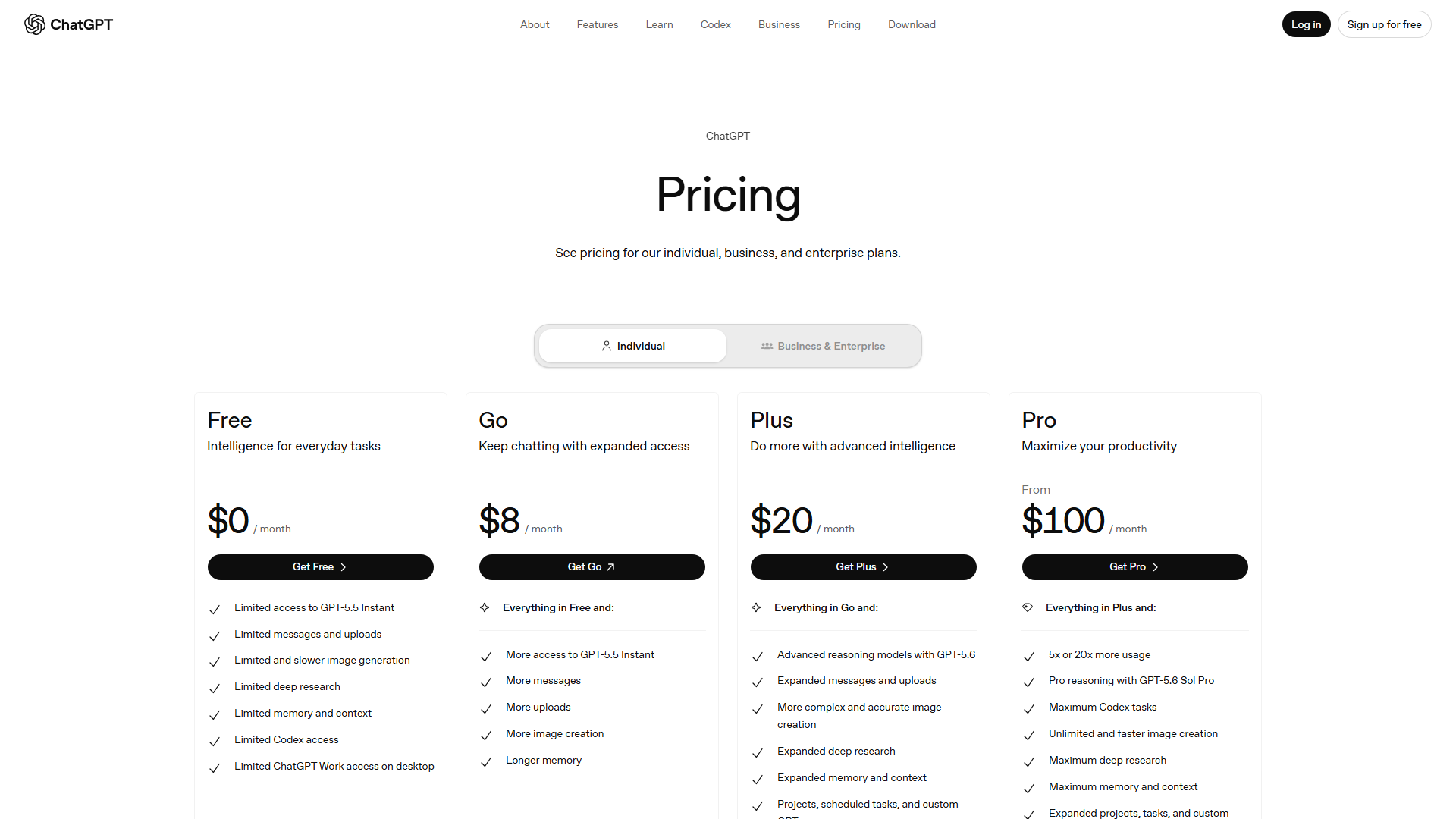
How much does ChatGPT cost depends on tier. According to the official ChatGPT pricing page, consumer paid access commonly starts around $20 per month for Plus-class plans, while higher Pro-class access is listed near $200 per month, with separate Business/Enterprise packaging for teams. How much does ChatGPT cost per month therefore ranges from $0 on free access to roughly $20–$200+ depending on model access and usage intensity. Free access remains available with tighter limits, which answers how to use ChatGPT for free for light drafting and learning.
Pricing comparisons should include Microsoft Copilot and Google Gemini, not only OpenAI tiers. Copilot often appears inside Microsoft 365 bundles, while Gemini sits inside Google’s consumer/workspace ecosystems. The table below frames limitations rather than declaring a universal winner, because seat packaging, admin controls, and included apps change total cost of ownership.
Chatgpt pro vs plus and commercial investigation notes
Chatgpt pro vs plus is mainly a capacity and model-access trade-off: Plus suits steady individual productivity, while Pro targets users who hit Plus ceilings. chatgpt vs copilot pricing is rarely apples-to-apples because Copilot’s value often rides on existing Microsoft seats. should i use chatgpt or copilot depends on whether your primary work happens in browser chats or inside Office files. chatgpt vs gemini vs copilot should be scored on admin controls, file workflows, and citation discipline—not brand preference alone. chatgpt vs codex for coding is a narrower choice: ChatGPT covers broader tasks, while specialized coding agents may outperform on large repository edits when integrated into developer tooling.
Where ChatGPT Falls Short (Critical Analysis)
Critical analysis starts with evidence quality. ChatGPT can sound authoritative while being wrong on niche regulations, local market prices, or proprietary metrics. Common complaints include hallucinated sources, inconsistent numeric reasoning, and uneven performance on long, multi-file projects without careful chunking. For education alternatives, a chatgpt alternative for education may be preferred when institutions need stronger citation controls, classroom admin features, or stricter academic integrity tooling.
Usually, teams notice gaps in auditability: chat transcripts are useful for individuals, but they are not a complete compliance system. Support documentation reveals that users must actively configure data controls and understand what is retained. User reports indicate that over-automation of customer replies without review can create brand and legal exposure, especially in regulated niches.
Compared with Copilot and Gemini, ChatGPT’s browser-first strength can become a weakness when work must stay inside locked-down document ecosystems. That does not make ChatGPT inferior overall; it means fit is contextual. Best chatgpt open ai deployments treat the product as a drafting and analysis accelerator with mandatory human checkpoints, not as an unsupervised operator.
Is ChatGPT good for studying?
Is ChatGPT good for studying when used as an explainer, quiz generator, and outline coach—yes, with guardrails. It is weaker as a sole source for exams or citation-heavy papers. Students and professionals should cross-check definitions against textbooks or official references and avoid submitting unverified model text as original research.
Final Verdict: Is ChatGPT Worth the Investment?
Is ChatGPT worth it for most small business owners evaluating ChatGPT for daily work? Often yes at Free or ~$20/month Plus-class tiers when drafting volume is high and review discipline exists. For startup founders needing AI for analytics and growth tasks, paid plans make more sense when prompts include verified data and outputs feed experiments rather than final financial decisions. A chatgpt open ai review that ignores process maturity will overstate ROI.
Purchase when you can measure hours saved on writing, research synthesis, or support draft queues. Delay heavy Pro spend until usage logs show Plus ceilings are a real bottleneck. Monitor OpenAI’s product updates via the company news hub, and keep the OpenAI Help Center bookmarked for account, billing, and data-control questions. For current plan names and limits, re-check the pricing page before budgeting, because tier packaging can change.
Closing Assessment on ChatGPT Open AI
ChatGPT Open AI remains a strong general-purpose assistant for writing speed and structured thinking support, with clear limits around factual reliability, governance, and source-of-truth analytics. For chatgpt for small business and early-stage growth work, Free or Plus-class plans usually deliver the best evidence-based value when paired with verification habits. Pro and team packages only justify themselves when usage intensity and admin needs are documented. Revisit official pricing and help materials before locking annual budgets, and keep competitor options like Copilot and Gemini in the evaluation set rather than assuming one vendor fits every workflow.