

AWS Bedrock vs The Rest: Which Alternative Fits?
Teams shortlisting platforms for generative incident analysis usually need one clear answer first: Amazon Bedrock is often the strongest fit when the stack already runs on AWS and RCA must stay behind IAM, VPC, and usage-based model billing—while Vertex AI, Azure OpenAI, and SageMaker win on other cloud or control trade-offs. <ul><li>Bedrock: managed foundation models plus Retrieve and Generate for log/runbook grounded answers</li><li>Vertex AI: Google Cloud-native GenAI with strong multimodal and Vertex Agent tooling</li><li>Azure OpenAI / AI Foundry: Microsoft-centric identity, Copilot-adjacent ops patterns</li><li>SageMaker: full training/hosting control when custom models dominate the TCO case</li></ul> Market analysis suggests SRE and DevOps groups evaluate these options on total cost of ownership, data residency, and how fast an RCA workflow can move from proof of concept to on-call use. The sections below compare that fit without treating any single vendor as a default winner.
Why Users Look for AWS Bedrock Alternatives?
<strong>Quick take:</strong> AWS Bedrock is a managed service for calling foundation models through a single API, with optional knowledge bases and agents for retrieval-augmented workflows. For Amazon Bedrock root-cause analysis programs, buyers usually compare it against other cloud GenAI stacks when pricing models, model mix, or multi-cloud policy force a wider RFP—not because Bedrock lacks an RCA path.
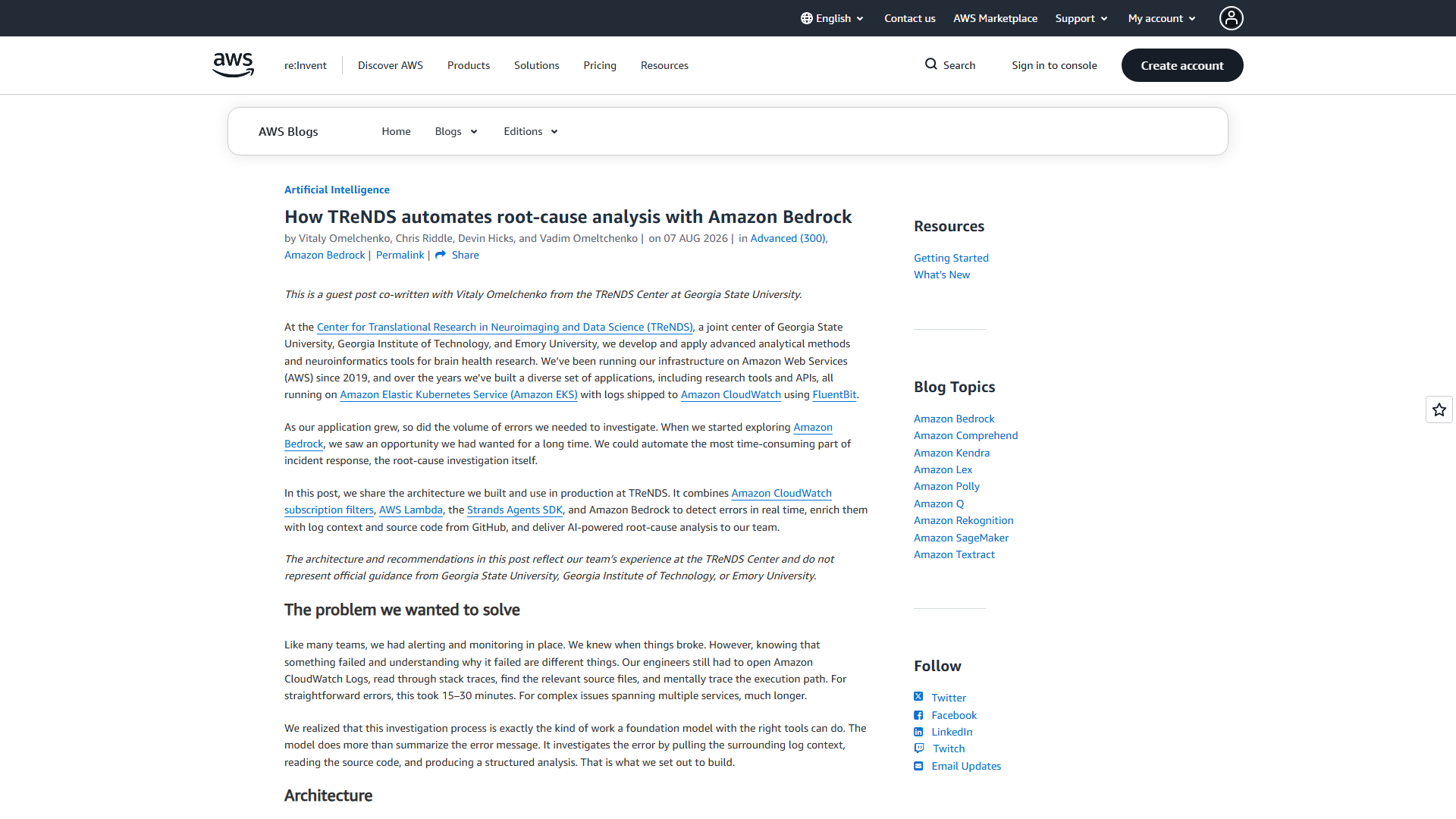
According to the AWS Machine Learning Blog case on TReNDS, production teams already automate incident root-cause analysis with Amazon Bedrock by combining agents, tools, and retrieval over operational context. That pattern is attractive for ML platform engineers building generative AI ops workflows on AWS, yet it also raises the same questions every alternatives review must answer: prerequisites, architecture choices, and how cost scales with token volume.
Strategically speaking, search demand clusters around getting started with AWS Bedrock, aws bedrock retrieve and generate, and aws bedrock pricing models because RCA pilots fail on grounding quality and spend predictability more often than on model brand names. For scaling companies, published data shows buyers also weigh AgentCore-style observability gaps when agent traces are incomplete; teams troubleshooting those failure modes often study why Bedrock AgentCore observability issues appear and how to contain them before expanding automation.
What is AWS Bedrock?
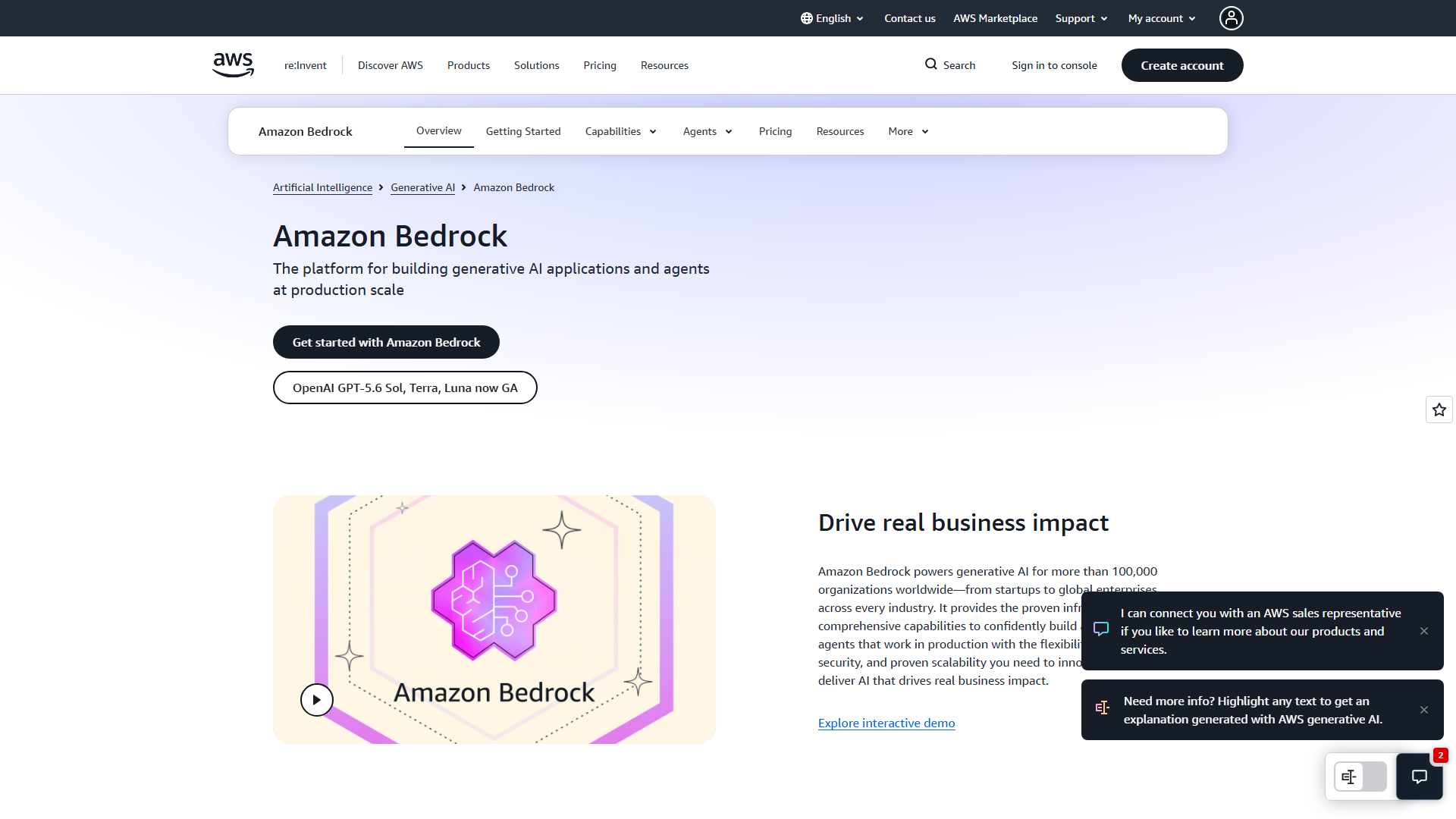
AWS Bedrock is Amazon’s fully managed generative AI service for accessing multiple foundation models through APIs, without operating your own GPU clusters for inference. Official product positioning is summarized on the AWS Bedrock product page, which frames Bedrock as the control plane for model choice, security integration, and application building blocks such as knowledge bases and agents.
In an Artificial Intelligence ops context, Bedrock is used to summarize incidents, propose likely causes from retrieved evidence, and draft remediation notes—not to replace monitoring backends. How AWS Bedrock works for RCA is typically: ingest or index telemetry and runbooks, retrieve relevant chunks, generate grounded explanations, then hand results to humans or ticketing tools. Prerequisites usually include an AWS account, model access approvals in the target Region, IAM least-privilege roles, and a retrieval corpus that on-call engineers trust.
The problem teams want to solve with Bedrock RCA
Manual root-cause analysis burns expensive engineer hours during incidents and postmortems. Amazon Bedrock for root-cause analysis targets that bottleneck by turning noisy logs, metrics annotations, and tribal runbooks into candidate explanations faster than pure keyword search.
Common mistakes include indexing raw logs without redaction, skipping citation checks in generated answers, and treating a chat demo as production readiness. Fixes map to clearer corpus design, mandatory source snippets in the UI, and staged rollout behind feature flags—details covered in the AWS Bedrock documentation for knowledge bases, agents, and API usage.
Alternative 1: Google Vertex AI – Best for Google Cloud GenAI Ops
Google Vertex AI is the primary alternative when the incident data plane and MLOps estate already sit on Google Cloud. It competes with Bedrock on managed foundation-model access, RAG patterns, and agent frameworks, but the ROI case usually hinges on existing BigQuery, Cloud Logging, and IAM continuity rather than raw model parity.
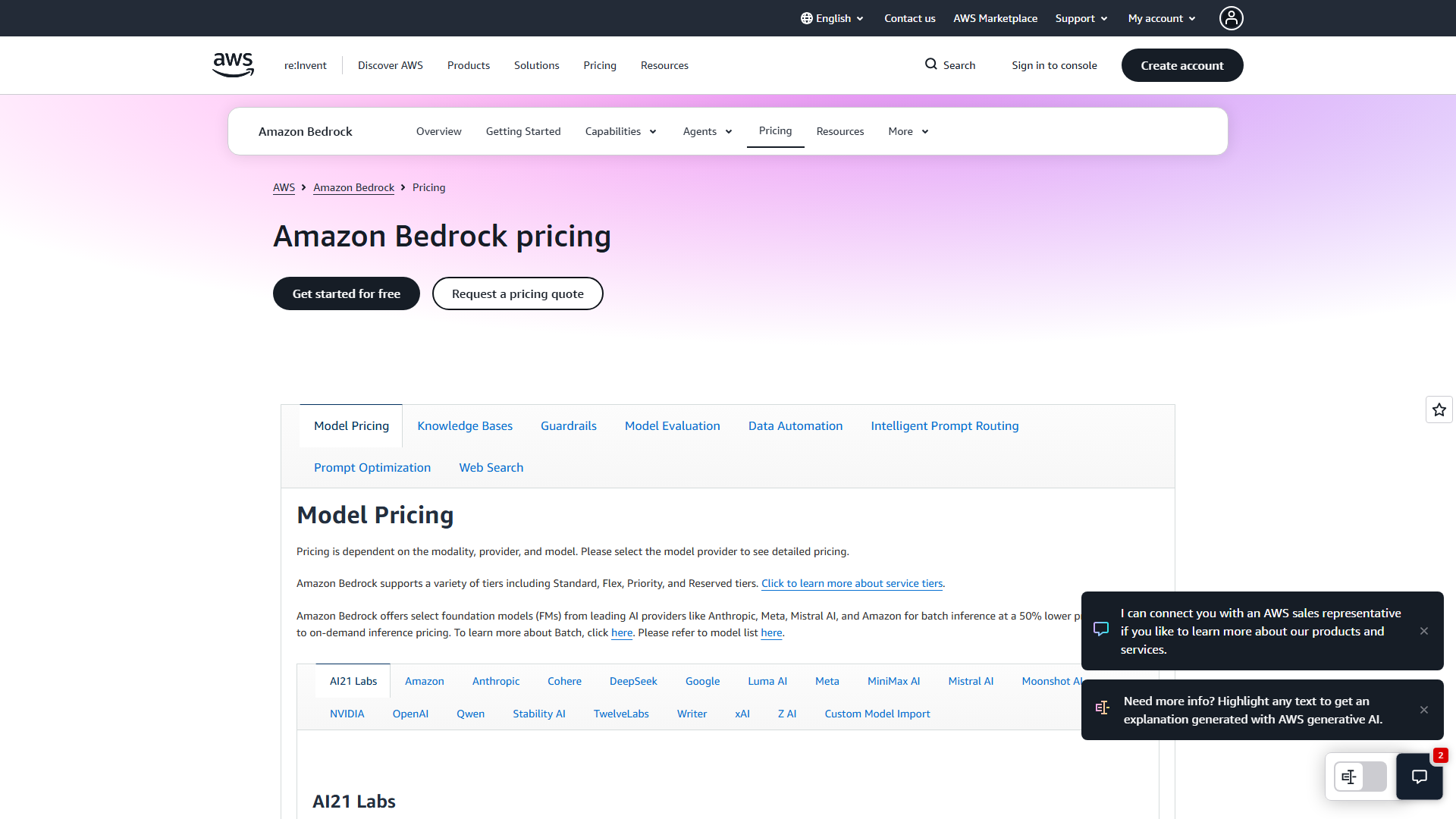
When we factor in TCO, Vertex can reduce cross-cloud egress and duplicated identity work for GCP-native SRE teams, while Bedrock remains cheaper to adopt organizationally for AWS-centric shops that already budget CloudWatch and S3. Neither platform’s list rates should be assumed from memory; Bedrock buyers should re-check current usage tiers on the official Bedrock pricing page before comparing token economics with Vertex quotes.
Implementation steps for a Vertex-led RCA pilot typically mirror Bedrock: define the retrieval corpus, choose a generation model, wire tools for ticket/search actions, then measure answer usefulness with on-call review. The business impact is strongest when GenAI sits next to existing GCP observability exports; multi-cloud teams often keep Bedrock for AWS accounts and Vertex for GCP accounts instead of forcing a single winner.
| Cost-benefit factor | Vertex AI tilt | Bedrock tilt | Business impact |
|---|---|---|---|
| Cloud affinity | Lower friction on GCP telemetry | Lower friction on AWS telemetry | Faster pilot if data gravity matches |
| Model access model | Vertex Model Garden / Gemini path | Multi-model API via Bedrock | Flexibility vs consolidation trade-off |
| RCA grounding | Vertex RAG / agents over GCP stores | Knowledge bases + Retrieve and Generate | Answer quality depends on corpus design |
| TCO driver | GCP usage + egress patterns | Bedrock tokens + retrieval/index costs | Confirm live rates before CapEx planning |
Alternative 2: Azure OpenAI / Azure AI Foundry – Best for Microsoft-Centric Stacks
Azure OpenAI Service and the broader Azure AI Foundry portfolio are the usual shortlist peers when identity, tickets, and developer tooling already orbit Microsoft Entra ID, Azure Monitor, and GitHub. For executives, the comparison is less “which model is smarter” and more “which control plane minimizes compliance review cycles.”
How to use AWS Bedrock for root-cause analysis versus an Azure path differs mainly in retrieval connectors and private networking patterns. Bedrock aligns with VPC endpoints and AWS IAM; Azure OpenAI aligns with Azure networking and enterprise Microsoft 365 adjacent workflows. The ROI potential appears to be highest on Azure when Copilot-era process standards and existing Azure OpenAI quotas already exist—and highest on Bedrock when AWS is the system of record for production workloads.
Pros for Azure-centric buyers include familiar enterprise contracting and integration with Azure observability. Cons include weaker default fit for teams whose production estate is almost entirely on AWS. Pros for Bedrock in the same bake-off include multi-model choice under one AWS bill and documented RCA automation patterns such as the TReNDS pipeline on the AWS ML Blog. Cons include the need to design observability for agents carefully so hallucinations and tool failures are auditable.
Architecture and pipeline differences that affect ROI
A Bedrock-oriented RCA architecture generally stages: signal collection → indexing/knowledge base → agent orchestration with tools → human validation → ticket update. The TReNDS narrative on AWS’s blog emphasizes automating that chain with Amazon Bedrock rather than relying on ad-hoc chat sessions.
Azure OpenAI architectures often substitute Azure AI Search and Azure-native agent/tooling components for the same stages. Cost-benefit analysis should score engineer time to integrate each stage, not only inference unit prices—especially when how to use aws bedrock api versus Azure’s client SDKs changes the platform team’s delivery calendar.
Alternative 3: Amazon SageMaker – Best for Custom Model Control
Amazon SageMaker remains the in-family alternative when the business case needs fine-tuned or fully custom models, dedicated hosting patterns, or training pipelines that Bedrock’s managed model catalog does not cover. It is not a drop-in chat API substitute; it is a broader ML platform with higher operational ownership.
For Amazon Bedrock root-cause analysis, SageMaker enters the conversation when proprietary failure classifiers or domain models must be trained on private incident corpora and served under strict performance SLOs. Bedrock usually wins time-to-value for Retrieve and Generate style assistants; SageMaker usually wins when model weights, training loops, and hosting topology are strategic assets.
Getting started with AWS Bedrock for RCA is typically fewer moving parts than standing up SageMaker endpoints, pipelines, and monitoring. SageMaker’s upside is control; its downside is platform engineering load. Budget owners should treat this as a build-versus-buy decision inside AWS rather than a pure feature checklist.
| TCO / ROI metric | AWS Bedrock | Amazon SageMaker | Decision cue |
|---|---|---|---|
| Time to first RCA assistant | Faster with managed models + RAG | Slower if training/hosting required | Choose Bedrock for speed-to-pilot |
| Ops ownership | Managed inference surface | Higher ownership of endpoints/pipelines | Choose SageMaker for deep customization |
| Pricing shape | Usage-based foundation model calls (verify live) | Compute + hosting + storage mix (verify live) | Model spend vs cluster spend |
| Fit for GenAI ops workflows | Strong for agents + knowledge bases | Strong for custom ML products | Productize assistant vs productize model |
Comparison Summary: Which One Fits Your Needs?
User sentiment in enterprise shortlists tends to split by cloud gravity: AWS-heavy SRE teams favor Bedrock for Amazon Bedrock for root-cause analysis, GCP-heavy teams favor Vertex AI, and Microsoft-heavy enterprises favor Azure OpenAI / AI Foundry. SageMaker appears when customization outweighs managed convenience.
How to use aws bedrock in an RCA program, at a practical level: approve model access, design a retrieval corpus, enable aws bedrock retrieve and generate or an agent with tools, enforce guardrails and logging, then measure mean-time-to-insight with on-call review. How does aws bedrock work in that loop is retrieval plus generation under AWS security controls—not a standalone APM replacement.
Pricing remains usage-based across these clouds; aws bedrock pricing models should be confirmed on the Bedrock pricing page alongside competitor quotes for the same token and retrieval assumptions. Avoid locking a multi-year GenAI ops budget to memorized unit rates.
| Platform | Best for | Primary trade-off | RCA fit signal |
|---|---|---|---|
| AWS Bedrock | AWS-native GenAI RCA assistants | Less ideal if production is mostly non-AWS | Strong when IAM/VPC and AWS telemetry dominate |
| Google Vertex AI | GCP-native GenAI ops | Weaker default for AWS-only estates | Strong when logs/metrics live in GCP |
| Azure OpenAI / AI Foundry | Microsoft enterprise stacks | Weaker default for AWS-only estates | Strong when Entra + Azure Monitor lead |
| Amazon SageMaker | Custom trained/hosted models | Higher platform overhead | Strong when model IP is the product |
Who should use AWS Bedrock for RCA
Choose Bedrock when SRE/DevOps automation must stay on AWS, when multi-model access under one service matters, and when knowledge-base grounded answers are enough to cut investigation time. Prefer Vertex or Azure paths when those clouds already own identity and telemetry. Prefer SageMaker when you must train and host specialized models rather than compose managed foundation models.
Scope limit: this comparison is platform-fit oriented. It does not replace a formal security review, nor does it substitute live pricing from each vendor’s official pages.
Final Verdict: Matching the Platform to Your RCA ROI Case
For most AWS-centric SRE and ML platform teams, AWS Bedrock remains the pragmatic default for Amazon Bedrock root-cause analysis because it combines managed multi-model access with retrieval and agent building blocks under existing AWS controls. Vertex AI, Azure OpenAI / AI Foundry, and SageMaker are credible alternatives when cloud gravity or custom-model strategy says otherwise.
Confirm security prerequisites, design the corpus before the prompt, and validate spend on the vendor’s live pricing surfaces before scaling. The winning choice is the one that shortens investigation time without creating a second cloud identity and data problem your on-call organization cannot support.